


The Outsiders (1983)
Crime, Drama • 1h 31m
Overview
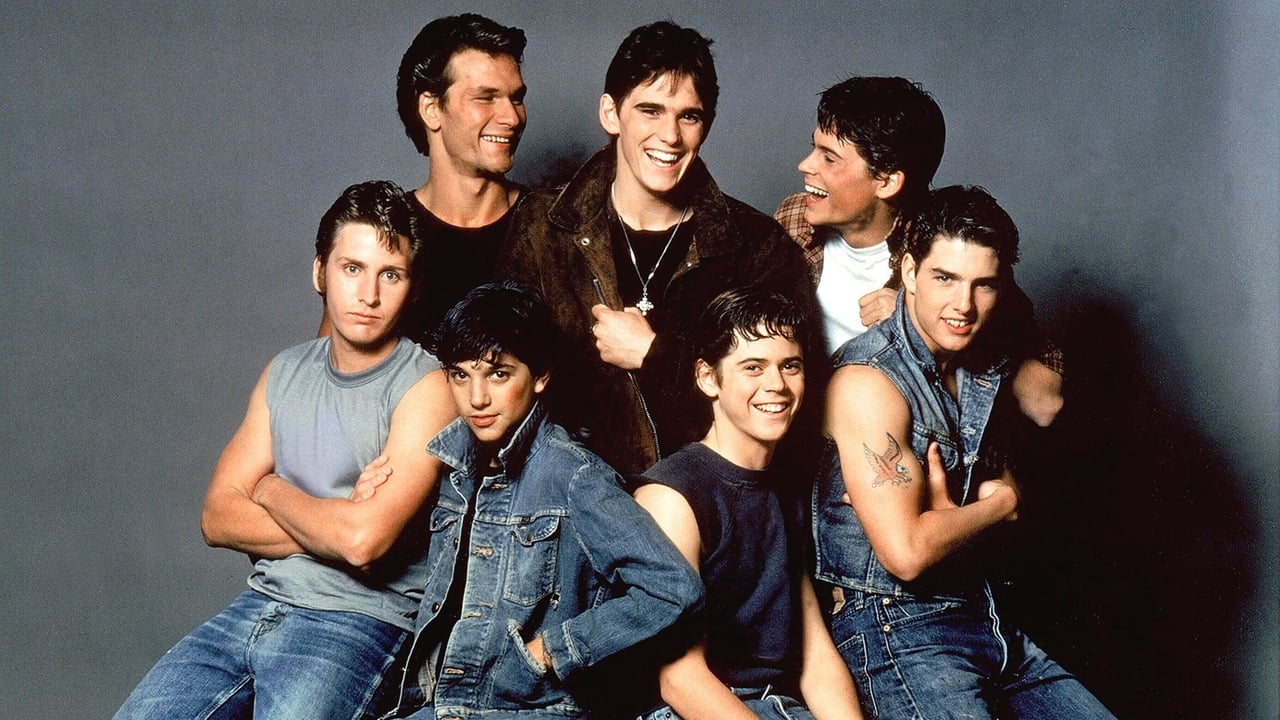
When two poor Greasers, Johnny and Ponyboy, are assaulted by a vicious gang, the Socs, and Johnny kills one of the attackers, tension begins to mount between the two rival gangs, setting off a turbulent chain of events.
Director: Francis Ford Coppola
Cast: C. Thomas Howell, Matt Dillon, Ralph Macchio, Patrick Swayze, Rob Lowe, Emilio Estevez, Tom Cruise, Glenn Withrow, Diane Lane, Leif Garrett, Darren Dalton, Michelle Meyrink, Tom Waits, Gailard Sartain, William Smith, Tom Hillmann, Hugh Walkinshaw, Sofia Coppola, Teresa Wilkerson Hunt, Linda Nystedt, S.E. Hinton, Brent Beesley, John C. Meier, Ed Jackson, Daniel R. Suhart, Nicolas Cage, Trey Callaway, Ronald Colby, Flea, Cam Neely, Jonnie Parnell




The Paramount 4K "restoration" is a desecration. It has completely revisionist color timing, harsh HDR, treatment of stock footage, bad encoding, selective DNR and grain management so bad that the entire screen frequently freezes up with only characters moving around in grain soup. It is so bad that the film's restorer Robert Harris publicly washed his hands of it saying essentially the 2007 restoration (with Willis and Coppola supervising) is how the film was intended and made. This is Paramount's modern version done their way. The new 1080p SDR Blu-rays in print are the crap 4K desecration master with the same problems still there just harder to spot and with crap encodes. Part II overall fares better than the first film but it has all the same problems. Randomly some shots are the worst in the trilogy looks mushy and manipulated to death.
The mono option is an unnecessarily processed version of the lossy mono from the 2008 Blu-ray. The 2008 Blu-ray of the 2007 Coppola Restoration while an imperfect outdated disc is LIGHT YEARS better than this 4K desecration. The only truly major issue is that it is very slightly redder than the 2007 finished master as seen on DCPs. The lossy mono on the 2008 Blu-ray is the best version of the original mix known to exist as it is better than the late 80's mastering for VHS and LaserDisc.
DFIC review of the hideous crap 4K Blu-rays: https://youtu.be/0uw6-Kcy_UA?si=ob1nDg0wTCvemjH0
The Paramount 4K "restoration" is a desecration. It has completely revisionist color timing, harsh HDR, treatment of stock footage, bad encoding, selective DNR and grain management so bad that the entire screen frequently freezes up with only characters moving around in grain soup. It is so bad that the film's restorer Robert Harris publicly washed his hands of it saying essentially the 2007 restoration (with Willis and Coppola supervising) is how the film was intended and made. This is Paramount's modern version done their way. The new 1080p SDR Blu-rays in print are the crap 4K desecration master with the same problems still there just harder to spot and with crap encodes. Part II overall fares better than the first film but it has all the same problems. Randomly some shots are the worst in the trilogy looks mushy and manipulated to death.
The mono option is an unnecessarily processed version of the lossy mono from the 2008 Blu-ray. The 2008 Blu-ray of the 2007 Coppola Restoration while an imperfect outdated disc is LIGHT YEARS better than this 4K desecration. The only truly major issue is that it is very slightly redder than the 2007 finished master as seen on DCPs. The lossy mono on the 2008 Blu-ray is the best version of the original mix known to exist as it is better than the late 80's mastering for VHS and LaserDisc.
DFIC review of the hideous crap 4K Blu-rays: https://youtu.be/0uw6-Kcy_UA?si=ob1nDg0wTCvemjH0

Director: Francis Ford Coppola
The Paramount 4K "restoration" is a desecration. It has completely revisionist color timing, harsh HDR, treatment of stock footage, bad encoding, selective DNR and grain management so bad that the entire screen frequently freezes up with only characters moving around in grain soup. It is so bad that the film's restorer Robert Harris publicly washed his hands of it saying essentially the 2007 restoration (with Willis and Coppola supervising) is how the film was intended and made. This is Paramount's modern version done their way. The new 1080p SDR Blu-rays in print are the crap 4K desecration master with the same problems still there just harder to spot and with crap encodes.
The mono option is an unnecessarily processed version of the lossy mono from the 2008 Blu-ray. The 2008 Blu-ray of the 2007 Coppola Restoration while an imperfect outdated disc is LIGHT YEARS better than this 4K desecration. The only truly major issue is that it is very slightly redder than the 2007 finished master as seen on DCPs. The lossy mono on the 2008 Blu-ray is the best version of the original mix known to exist as it is better than the late 80's mastering for VHS and LaserDisc.
DFIC review of the hideous crap 4K Blu-rays: https://youtu.be/0uw6-Kcy_UA?si=ob1nDg0wTCvemjH0
Director: Francis Ford Coppola
The Paramount 4K "restoration" is a desecration. It has completely revisionist color timing, harsh HDR, treatment of stock footage, bad encoding, selective DNR and grain management so bad that the entire screen frequently freezes up with only characters moving around in grain soup. It is so bad that the film's restorer Robert Harris publicly washed his hands of it saying essentially the 2007 restoration (with Willis and Coppola supervising) is how the film was intended and made. This is Paramount's modern version done their way. The new 1080p SDR Blu-rays in print are the crap 4K desecration master with the same problems still there just harder to spot and with crap encodes.
The mono option is an unnecessarily processed version of the lossy mono from the 2008 Blu-ray. The 2008 Blu-ray of the 2007 Coppola Restoration while an imperfect outdated disc is LIGHT YEARS better than this 4K desecration. The only truly major issue is that it is very slightly redder than the 2007 finished master as seen on DCPs. The lossy mono on the 2008 Blu-ray is the best version of the original mix known to exist as it is better than the late 80's mastering for VHS and LaserDisc.
DFIC review of the hideous crap 4K Blu-rays: https://youtu.be/0uw6-Kcy_UA?si=ob1nDg0wTCvemjH0

Director: Francis Ford Coppola
Director: Francis Ford Coppola

Director: Francis Ford Coppola
Criterion 2.0 Surround Track
Director: Francis Ford Coppola
Criterion 2.0 Surround Track

1991 Home Video Cut: Paramount 2008 Blu-ray
Theatrical Cut: Paramount 4K Blu-ray, but it has problems described below in the additional info section, and worse encoding than the Coda cut.
Coda Cut: Paramount 4K Blu-ray, but it has problems described below in the additional info section, and also has slightly better encoding than the Theatrical/1991 Home Video cuts on 4K.
1991 Home Video Cut: Paramount 2008 Blu-ray
Theatrical Cut: Paramount 4K Blu-ray, but it has problems described below in the additional info section, and worse encoding than the Coda cut.
Coda Cut: Paramount 4K Blu-ray, but it has problems described below in the additional info section, and also has slightly better encoding than the Theatrical/1991 Home Video cuts on 4K.
LaserDisc for original mix
The Paramount 4K "restoration" is a desecration. It has completely revisionist color timing, harsh HDR, treatment of stock footage, bad encoding, selective DNR and grain management so bad that the entire screen frequently freezes up with only characters moving around in grain soup. It is so bad that the film's restorer Robert Harris publicly washed his hands of it saying essentially the 2007 restoration (with Willis and Coppola supervising) is how the film was intended and made. This is Paramount's modern version done their way. The new 1080p SDR Blu-rays in print are the crap 4K desecration master with the same problems still there just harder to spot and with crap encodes. Part III fares best of the three and these issues are at their most minimal-but they're still there. The new Coda version is given prominence with lesser encodes for the other two versions. The original mix was remixed into 5.1 decades ago and we have yet another version of this instead of the original Dolby Stereo SR as heard on the LaserDisc release.
The 2008 Blu-ray of the 2007 restoration, while an imperfect outdated disc, is LIGHT YEARS better than this 4K desecration. The only truly major issue is that it is very slightly redder than the 2007 finished master as seen on DCPs.
DFIC review of the hideous crap 4K Blu-rays: https://youtu.be/0uw6-Kcy_UA?si=ob1nDg0wTCvemjH0
Despite being restored alongside the Coppola Restorations of The Godfather: Parts I and II, the Part III restoration is not officially labelled a Coppola Restoration.
1991 Home Video Cut: Paramount 2008 Blu-ray
Theatrical Cut: Paramount 4K Blu-ray, but it has problems described below in the additional info section, and worse encoding than the Coda cut.
Coda Cut: Paramount 4K Blu-ray, but it has problems described below in the additional info section, and also has slightly better encoding than the Theatrical/1991 Home Video cuts on 4K.
1991 Home Video Cut: Paramount 2008 Blu-ray
Theatrical Cut: Paramount 4K Blu-ray, but it has problems described below in the additional info section, and worse encoding than the Coda cut.
Coda Cut: Paramount 4K Blu-ray, but it has problems described below in the additional info section, and also has slightly better encoding than the Theatrical/1991 Home Video cuts on 4K.
LaserDisc for original mix
The Paramount 4K "restoration" is a desecration. It has completely revisionist color timing, harsh HDR, treatment of stock footage, bad encoding, selective DNR and grain management so bad that the entire screen frequently freezes up with only characters moving around in grain soup. It is so bad that the film's restorer Robert Harris publicly washed his hands of it saying essentially the 2007 restoration (with Willis and Coppola supervising) is how the film was intended and made. This is Paramount's modern version done their way. The new 1080p SDR Blu-rays in print are the crap 4K desecration master with the same problems still there just harder to spot and with crap encodes. Part III fares best of the three and these issues are at their most minimal-but they're still there. The new Coda version is given prominence with lesser encodes for the other two versions. The original mix was remixed into 5.1 decades ago and we have yet another version of this instead of the original Dolby Stereo SR as heard on the LaserDisc release.
The 2008 Blu-ray of the 2007 restoration, while an imperfect outdated disc, is LIGHT YEARS better than this 4K desecration. The only truly major issue is that it is very slightly redder than the 2007 finished master as seen on DCPs.
DFIC review of the hideous crap 4K Blu-rays: https://youtu.be/0uw6-Kcy_UA?si=ob1nDg0wTCvemjH0
Despite being restored alongside the Coppola Restorations of The Godfather: Parts I and II, the Part III restoration is not officially labelled a Coppola Restoration.

Sony 2022 Steelbook 4K Blu-ray
Sony 2022 Steelbook 4K Blu-ray for Dolby Vision, original forced subtitles, updated a few scenes (see caps), and a few new extras on the 4K Blu-ray disc.
Sony 2022 Steelbook 4K Blu-ray
Sony 2022 Steelbook 4K Blu-ray for Dolby Vision, original forced subtitles, updated a few scenes (see caps), and a few new extras on the 4K Blu-ray disc.


Theatrical: Italy Eagle Pictures 4K Blu-ray
Redux: Lionsgate vs Eagle Pictures?
Final: Lionsgate or Eagle Pictures
Theatrical Cut: Italy Eagle Pictures 4K Blu-ray > US Lionsgate 4K Blu-ray
Redux Cut: Lionsgate vs Eagle Pictures?
Final Cut: Lionsgate or Eagle Pictures, both are not great (visible chroma noise)
Theatrical: Germany 4K Blu-ray/US Blu-ray DD 5.1 (1979 mix)
In the Lionsgate US/UK 6-disc set, there are 4 discs of the main feature. For whatever reason, the 4K discs lack the *original track. The Germany 4K Blu-ray release is different on this matter.
UBD: Final Cut: Atmos, DD2.0
UBD: Redux/Theatrical: Atmos
BD: Final Cut: Atmos, DD2.0
BD: Redux/Theatrical: Dtru5.1 (Redux mix?), DD5.1 (?), DD5.1 (Theatrical only), DD2.0 (downmix??)
As a result the Theatrical Cut has 4 tracks, The Redux has 3. Differences are unclear.
BD: Hearts of Darkness
BD: Special Features
Theatrical: Italy Eagle Pictures 4K Blu-ray
Redux: Lionsgate vs Eagle Pictures?
Final: Lionsgate or Eagle Pictures
Theatrical Cut: Italy Eagle Pictures 4K Blu-ray > US Lionsgate 4K Blu-ray
Redux Cut: Lionsgate vs Eagle Pictures?
Final Cut: Lionsgate or Eagle Pictures, both are not great (visible chroma noise)
Theatrical: Germany 4K Blu-ray/US Blu-ray DD 5.1 (1979 mix)
In the Lionsgate US/UK 6-disc set, there are 4 discs of the main feature. For whatever reason, the 4K discs lack the *original track. The Germany 4K Blu-ray release is different on this matter.
UBD: Final Cut: Atmos, DD2.0
UBD: Redux/Theatrical: Atmos
BD: Final Cut: Atmos, DD2.0
BD: Redux/Theatrical: Dtru5.1 (Redux mix?), DD5.1 (?), DD5.1 (Theatrical only), DD2.0 (downmix??)
As a result the Theatrical Cut has 4 tracks, The Redux has 3. Differences are unclear.
BD: Hearts of Darkness
BD: Special Features


Director: William Dieterle
Director: William Dieterle


Director: Griffin Dunne
Director: Griffin Dunne

Director: Rob Reiner
Director: Rob Reiner

Director: Vincente Minnelli
Director: Vincente Minnelli

Director: George Sidney
Director: George Sidney


Director: Todd Phillips
Director: Todd Phillips

More Crime on Blu-ray

Director: George Roy Hill
Director: George Roy Hill

Director: Ivan Passer
Radiance 4K Blu-ray, though note its different color grading from the IP-sourced but poorly compressed Fun City Editions US Blu-ray (caps)
Judging from spectrograms at https://forum.blu-ray.com/showpost.php?p=23933756&postcount=57, Fun City Editions US Blu-ray appears to have marginally less filtering than Radiance 4K Blu-ray (whose padded 16-bit depth is a non-issue). There are also loudness differences, though it's unclear whether dynamic range also differs. Caveat: need to A/B both tracks to confirm, but no one has posted actual A/B impressions.
Director: Ivan Passer
Radiance 4K Blu-ray, though note its different color grading from the IP-sourced but poorly compressed Fun City Editions US Blu-ray (caps)
Judging from spectrograms at https://forum.blu-ray.com/showpost.php?p=23933756&postcount=57, Fun City Editions US Blu-ray appears to have marginally less filtering than Radiance 4K Blu-ray (whose padded 16-bit depth is a non-issue). There are also loudness differences, though it's unclear whether dynamic range also differs. Caveat: need to A/B both tracks to confirm, but no one has posted actual A/B impressions.

Director: Frank Borzage
While Indicator Blu-ray used a newer 4K restoration from 2022 instead of the older 2K restoration, Kino Lorber has the original aspect ratio, and the Indicator Blu-ray looks very soft in comparison see comparison
Director: Frank Borzage
While Indicator Blu-ray used a newer 4K restoration from 2022 instead of the older 2K restoration, Kino Lorber has the original aspect ratio, and the Indicator Blu-ray looks very soft in comparison see comparison


Director: Michael Mann
Shout! Factory 4K Blu-ray upcoming, Director's Final Cut premiering October 3rd; will receive home video release in the future
Director: Michael Mann
Shout! Factory 4K Blu-ray upcoming, Director's Final Cut premiering October 3rd; will receive home video release in the future

Director: Billy Wilder
Criterion 4K Blu-ray > Capelight/Kino Lorber which has heavy noise reduction and opening snare hit is missing, Capelight is slightly better encoded than Kino Lorber
Director: Billy Wilder
Criterion 4K Blu-ray > Capelight/Kino Lorber which has heavy noise reduction and opening snare hit is missing, Capelight is slightly better encoded than Kino Lorber

Criterion 4K Blu-ray scheduled for October 2026 release
1991 Orion LaserDisc vs 2024 Arrow 4K Blu-ray
Criterion 4K Blu-ray scheduled for October 2026 release
1991 Orion LaserDisc vs 2024 Arrow 4K Blu-ray

Director: Luchino Visconti
Director: Luchino Visconti
Edit History
Made with ❤️ 📀 by vanshady