


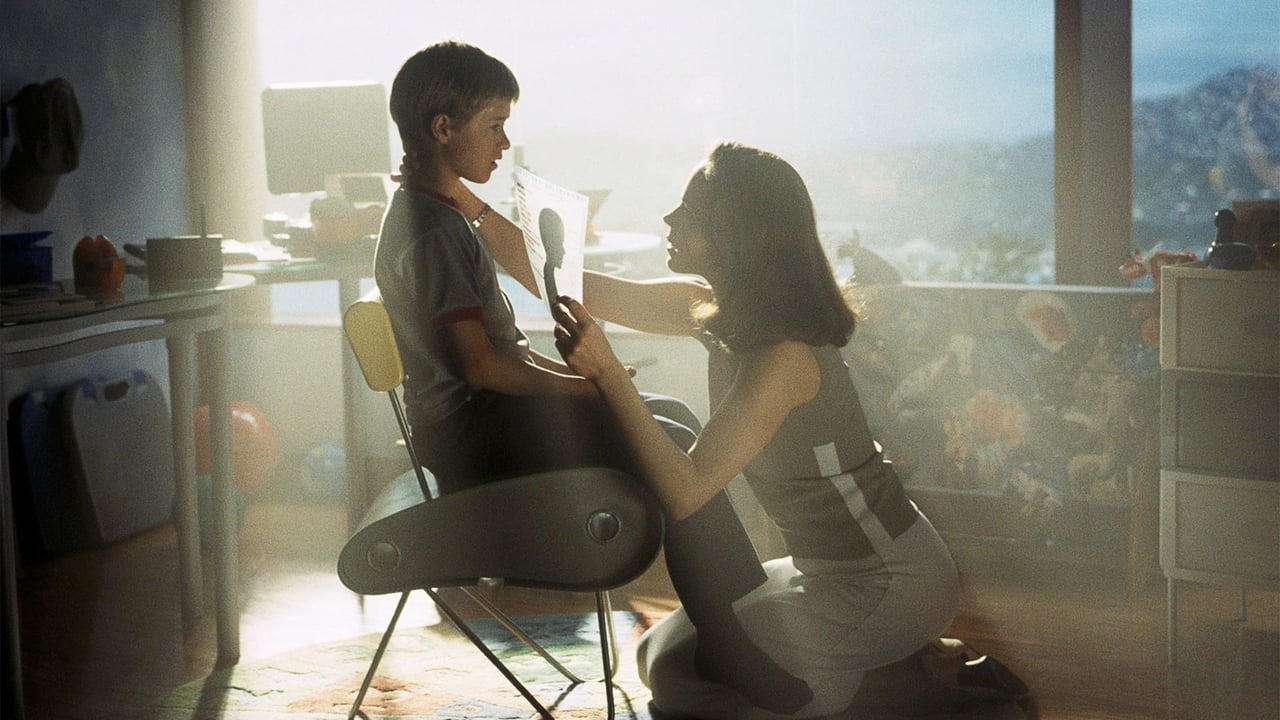
A.I. Artificial Intelligence (2001)
Drama, Science Fiction, Adventure • 2h 25m
Director: Steven Spielberg
Cast: Haley Joel Osment, Jude Law, Frances O'Connor, Sam Robards, Jake Thomas, William Hurt, Jack Angel, Robin Williams, Ben Kingsley, Meryl Streep, Chris Rock, Ken Leung, Clark Gregg, Kevin Sussman, Tom Gallop, Eugene Osment, April Grace, Matt Winston, Sabrina Grdevich, Theo Greenly, Michael Mantell, Keith Campbell, Brian Turk, Brendan Gleeson, Christopher Dye, Tim Rigby, Enrico Colantoni, Adrian Grenier, Matt Malloy, Brent Sexton, Erik Bauersfeld, Michael Fishman, Diane Fletcher, Al Jourgensen, Paul Barker, Vito Carenzo, Adam Grossman, Rena Owen, Adam Alexi-Malle, Laurence Mason, Ashley Scott, Ty Coon, Duane Buford, Max Brody, Red King, Claude Gilbert, Kate Nei, Laia Salla, Jeanine Salla, Mark Allan Staubach, Miguel Pérez, Billy Scudder, Bobby Harwell, Wayne Wilderson, R. David Smith, Eliza Coleman, Jim Jansen, Tim Rhoze, Clara Bellar, Kelly McCool, Michael Shamus Wiles, Jason Sutter, Ken Palmer, J. Alan Scott, Lily Knight, Justina Machado, Daveigh Chase, Kathryn Morris, Hunter King, Michael Berresse, Paula Malcomson, John Prosky, Curt Youngberg, Andy Morrow, Dillon McEwin, Jeremy James Kissner, John Harmon



Best English-friendly & video release · updated 10 months ago
Overview
David, a robotic boy—the first of his kind programmed to love—is adopted as a test case by a Cybertronics employee and his wife. Though he gradually becomes their child, a series of unexpected circumstances make this life impossible for David.

Sources: slow.pics (opens in a new tab) · Blu-ray.com (opens in a new tab)
The new Universal 4K is AI upscaled https://slow.pics/c/5jD2BjKT and sharpened, see discussion on BR https://forum.blu-ray.com/showthread.php?t=377660&page=9

Director: Steven Spielberg
Sources: Criterion Forum (opens in a new tab)
1995/1997 MCA LaserDisc

35mm/70mm scan, Japan WOWOW Broadcast version, letterbox LaserDisc or DVD for purist version, Paramount 4K Blu-ray heavily revisionist
Sources: fanrestore.com (opens in a new tab) · YouTube (opens in a new tab)
1992 LaserDisc Dolby Surround, DVD 5.1 (70mm mix), 1991 Japan LaserDisc PCM (Dolby Stereo home version)
The Paramount 4K master is HEAVILY revisionist in that all of the effects and opticals were redone and tweaked with errors and issues. There has been grain management (moments of stagnating grain and haloing) and the encoding isn't great hence the typical Paramount noise in the image. (especially skies) The HDR is a bit bright in the highlights. The color timing and Atmos remix are thankfully taming the excessively overdone terrible Blu-ray in those areas but neither is fully accurate. The Atmos remix sounds lifeless and essentially tames the crazy LFE of the Blu-ray remix that never stopped while also spreading the sound around overhead. The music is absolutely lifeless here. If it weren't for the visual changes it might be possible to regrade the picture master and just live with the encoding noise. As it is, purists will want the LaserDisc, DVD or Japan WOWOW broadcast of the Laser Pacific master which is the same master used for the awful Blu-ray just without the hideous color grading applied.
The DVD was handled by Lowry Digital and is overscrubbed like crazy plus had all sorts of DVD era edge enhancement and other issues. It instigated the digital changes of the boulder rod and snake reflection removals. The ONLY widescreen versions of the film without ANY changes are the 1992 LaserDisc and the 1999 final release VHS.
Audio wise, Raiders is EXTREMELY complex. Like the Star Wars trilogy it had three specific release mixes with variations and differences plus a fourth mix that was not used. The mono mix had unique bits and has never been officially released though you can hear bits of it on the 2003 bonus DVD and in the Raiders in Concert live symphony performances. The Dolby Stereo is roughly what was used on all pre-widescreen editions on VHS, Beta and LaserDisc in the 80's. The best iteration of that is the 1991 Japan LaserDisc reissue with PCM digital sound. This iteration is more of a home version as it doesn't really have much surround. Yet it retains dynamic range unlike the 1985 home video remix of Star Wars' Dolby Stereo track. The 70mm Dolby six track magnetic audio was supposedly used in making the excellent sounding 5.1 made for the DVD release. Before the release the film was mixed in the very short lived VistaSonic process which was Paramount backed. This was dropped very last minute as the system had tons of playback issues and the film was apparently hastily remixed in Dolby formats. When the first letterboxed transfer showed up on the 1992 Paramount LaserDisc release all of a sudden the Dolby Surround encoded matrix track it contained is without question the best sounding mix of Raiders you can find anywhere. It is more aggressive than the Dolby Stereo, more punchy than the DVD 5.1 and even contains a unique different sound effect which indicates it is clearly a different mix. It is unknown if this is the abandoned VistaSonic mix or a new quiet Dolby Surround home mix akin to the 1993 Star Wars Definitive Collection remix. To this day, the LaserDisc Dolby surround is the best sounding version of Raiders you are likely ever to hear. Even though it isn't discrete.
The Blu-ray remix though supervised by Ben Burtt went overboard on making everything aggressive and modernized. The LFE is virtually nonstop even in dialogue scenes. It is a textbook case of revisionist audio desecration. The 4K Blu-ray Atmos merely tames the LFE and reduces impact even more by moving around more elements and adding more processing. Both of these remixes are a crime.
DFIC extensive review: https://youtu.be/evsrJOTIjdA

Paramount 4K Blu-ray Purist choice: Blu-ray
Sources: YouTube (opens in a new tab)
Paramount 4K Blu-ray new improved master with color grading and slight issues. Blu-ray is old master with original color grading
Blu-ray 5.1
The Paramount 4K Blu-ray has a much better new scan that removes the original extremely dated color grading. This is an improvement on one hand but a definite revisionist change on the other. There is the expected grain management and slight HDR issues in addition to encoding quirks from Paramount. It is a giant improvement over the original Blu-ray but the color change and other issues means that the Blu-ray is one to keep for purists to have the as-is original iteration of the film's presentation. Audio wise the film has been remixed into Atmos but it merely seems like a slightly tweaked and frankly tamed version of the original 5.1. Of the two I prefer the Blu-ray 5.1. The original Blu-ray was Dolby TrueHD and the reissue Blu-ray in the four film Blu-ray collection boxset was DTS-HDMA.
DFIC extensive review: https://youtu.be/evsrJOTIjdA?si=wtdWGxZBfhPYTIeW

Video format: UHD Blu-ray
Sources: YouTube (opens in a new tab)
Paramount 4K Blu-ray heavily revisionist. Purist option: 35mm scan, Blu-ray, DVD or LaserDisc
The Paramount 4K master is HEAVILY revisionist in that all of the effects and opticals were redone and tweaked with errors and issues. There has been grain management (moments of stagnating grain and haloing) and the encoding isn't great hence the typical Paramount noise in the image. (especially skies) The HDR is a bit bright in the highlights. The Blu-ray is showing its age but does not have any of these digital alterations. It is from the scan done by Laser Pacific and is the highest quality unaltered master we have. The DVD was done by Lowry Digital and had much scrubbing and processing of grain in addition to edge enhancement. The letterbox LaserDisc was the first widescreen release and is very good for its time. There was also a rare SVHS release using the letterbox LaserDisc master.
The 4K Blu-ray audio is seemingly an Atmos remix of the 5.1 found on the Blu-ray which itself is very similar to the DVD 5.1. All are presumably based on the 70mm Dolby six track mix. The Atmos is more processed and moves the sound around more so it is inferior to the older 5.1 iterations. On release, Last Crusade had Dolby 70mm with stereo surrounds, Dolby Stereo SR for 35mm and was mixed in a THX sound theater to ensure the ultimate in technical quality in 1989. The DVD was supposedly made from the 70mm mix and the Blu-ray 5.1 seems to bring that into lossless. This is unconfirmed but each seems to be a healthy and accurate version of the original audio. However, the LaserDisc despite only having matrix PCM stereo is punchier and livelier as a listening experience. Despite not being discrete it arguably sounds better than the 5.1 versions. Some who remember seeing each of the original release versions claim to remember the 35mm Dolby DR as sounding better than the 70mm Dolby. This is a case where both sound great and it's up to fans to decide which they prefer. Both are essential for any Indy collection and the LaserDisc is very cheap. The VHS hifi seems to be the same 2.0 matrix with format differences so it can also be compared against the DVD and Blu-ray 5.1 versions.
DFIC extensive review: https://youtu.be/evsrJOTIjdA?si=wtdWGxZBfhPYTIeW

Video format: UHD Blu-ray
Sources: YouTube (opens in a new tab)
Paramount 4K Blu-ray heavily revisionist. Purist option: 35mm scan, Blu-ray, DVD or LaserDisc.
The Paramount 4K master is HEAVILY revisionist in that all of the effects and opticals were redone and tweaked with errors and issues. There has been grain management (moments of stagnating grain and haloing) and the encoding isn't great hence the typical Paramount noise in the image. (especially skies) The HDR is a bit bright in the highlights. The Blu-ray is showing its age but does not have any of these digital alterations. It is from the scan done by Laser Pacific and is the highest quality unaltered master we have. The DVD was done by Lowry Digital and had much scrubbing and processing of grain in addition to edge enhancement. The letterbox LaserDisc was the first widescreen release and is very good for its time.
The 4K Blu-ray audio is seemingly an Atmos remix of the 5.1 found on the Blu-ray which itself is very similar to the DVD 5.1. All are presumably based on the 70mm Dolby six track mix. The Atmos is more processed and moves the sound around more so it is inferior to the older 5.1 iterations. On release Temple of Doom had 70mm, 35mm Dolby Stereo and mono mixes. The mono was for 16mm and other outlets and is presumably close to if not a mixdown of the stereo. It is seemingly the last Lucasfilm title that had a mono mix made. The Dolby Stereo is one of the most aggressive matrix mixes ever made and is still a blast to this day on the letterbox LaserDisc release. It is more aggressive than any of the 5.1 discrete versions which is either due to studios taming the audio later or the 35mm mix being handled a bit differently to the 70mm mix. In terms of releases today, the LaserDisc still sounds better than DVD, Blu-ray or 4K Blu-ray because of this factor.
DFIC extensive review: https://youtu.be/evsrJOTIjdA?si=wtdWGxZBfhPYTIeW

Universal 4K Blu-ray Trilogy Steelbook 2025
Sources: Blu-ray.com (opens in a new tab)
But has more DNR than old 4K
But has more DNR than old 4K
https://forum.blu-ray.com/showpost.php?p=23286334&postcount=7340

Director: Steven Spielberg
"Director's Cut" (Theatrical cut with minor changes): Universal 4K Blu-ray
Theatrical Cut: VHS
TV Cut: Fan restoration
1993 MCA LaserDisc (with EQ adjusted)

Director: Steven Spielberg
Sources: slow.pics (opens in a new tab)
Paramount 4K Blu-ray or Cinema DTS-ES


Director: Peter Faiman
Australia Cut: Australia Fox DVD
International Cut: Paramount Blu-ray
Encore Cut: Germany Winkler Film 4K Blu-ray, censored but good encoding
Sources: movie-censorship.com (opens in a new tab)
US Paramount 4K Blu-ray, is the International US Cut and not the Encore Cut
Australia Cut: Laserdisc
The film exists in three versions:
- the original Australian cut (~104 minutes at 24fps/~100 minutes at 25fps);
- the American/international version (~98 minutes at 24fps/~94 minutes at 25fps) trimming some exposition in the Outback first half of the film and some shorter extensions of a few seconds in the New York section, altering some of the dialogue – including censoring a "fuck" to "screw" – but featuring one additional dialogue extension not in the Australian version (a comparison of the two cuts can be found at Movie Censorship);
- the Australian Encore Cut (~95 minutes at 24fps/~91 minutes at 25fps) which uses the international version source so it already has those alterations but also removes approximately three minutes consisting of parts of two scenes featuring Mick grabbing the crotch of a cross-dressing prostitute and a later sequence when he does the same thing at a party to a woman with a deep voice (a comparison of the international version and the Encore Cut can be found at Movie Censorship).

3D version: Paramount 3D Blu-ray
Paramount 4K Blu-ray on October 26 2026

Director: Billy Wilder
Sources: slow.pics (opens in a new tab)
Paramount 4K Blu-ray. See caps
HDR/grading: nice, but some blown out
Encoding: inconsistent, smeared motion
DNR: inconsistent, frozen
Old Paramount Blu-ray is arguably a solid alternative choice
Paramount 4K Blu-ray mono
Paramount 4K Blu-ray mono is different version of the Blu-ray mono from the same old 2000 DVD transfer.
The 5.1 remix on the 4K Blu-ray is an appalling remix done by going wild with artificially generated stems from Park Road Post who were given the surviving mono to separate. The experience is jarring and fidelity to original mix in terms of level balance, directionality and impact is nonexistent. Not only does this sound painfully weird, but the Paramount mixers then did whatever they wanted in terms of LFE, sound pans and effect changes.
The original mono mix was not restored and still needs it badly. The 4K master is filled with frozen grain examples coming and going plus some HDR issues in addition to the usual Paramount problems. It is simultaneously better and worse than the Blu-ray master.

Director: Robert Altman
Sources: Criterion Forum (opens in a new tab)
Criterion 4K Blu-ray scheduled for Dec 2026 release

Director: Richard Linklater
Sources: caps-a-holic (opens in a new tab)

Original AR: Paramount 4K Blu-ray
IMAX AR: Paramount 3D Blu-ray


Directors: Arturo Perez Jr. & Samantha Jayne

Director: Robert Altman
Sources: YouTube (opens in a new tab) · mega.nz (opens in a new tab)
Popeye was mixed for a failed Vistasonic system with 4 discrete tracks (L/C/R/S). That mix has never been released on home video in its original form.
The older 5.1 track appearing on older DVD/BD releases sounds excellent. It appears to be a slight upmix of the original mix, only splitting the surrounds and adding LFE. It sounds close to the old analog LaserDisc, which is likely the original mix in a matrixed form.
The 5.1 included on the UHD is a new remix which significantly differs from previous tracks. There are new foley effects all over the place. Music is jarringly spliced in from different sources. Unlike the old 5.1 which had clearly discrete surrounds, the channels surrounds overlap somewhat with the fronts here.
Details on the new mix from Paramount's former head of restoration: https://youtu.be/P-AmjqViJyE?t=788
The 2.0 tracks on all DVDs/BDs are just downmixes of their respective 5.1 mixes.
Samples
More Drama on Blu-ray

Director: Alan Clarke
Video format: UHD Blu-ray
Sources: Criterion Forum (opens in a new tab)
The 88 Films 4K Blu-ray is disappointing. Indicator Blu-ray > 88 Films Blu-ray. From nicolas:
Fine master, solid HDR but very poorly encoded with strong blocking artifacts in normal areas and clipped highlights that bring Criterion’s Walkabout to mind. Their Blu-ray is slightly better overall but then again still not as good as FiM’s encode for Indicator.

Germany Filmjuwelen 4K Blu-ray is disappointing with AI upscaling

Director: Peter Bogdanovich
Sources: Criterion Forum (opens in a new tab) · Blu-ray.com (opens in a new tab)
Eureka UK are considering doing a 4K and actively exploring the possibility: https://forum.blu-ray.com/showpost.php?p=24363810&postcount=264
Wonderful underlying remaster by Criterion and Resillion, but NexSpec encode has clipped highlights with the occasional blockiness. The Criterion Blu-Ray, sourced from their 4K remaster, ironically makes for a more consistent and overall pleasing experience.

Director: Luis Buñuel
Sources: Criterion Forum (opens in a new tab)

Director: Ingmar Bergman

Sources: Criterion Forum (opens in a new tab)
For Blu-ray Criterion Demy Set > StudioCanal

Director: Kenji Mizoguchi
Sources: Criterion Forum (opens in a new tab)
See chris's review
1991 Daiei LaserDisc

Sources: Criterion Forum (opens in a new tab)

Director: John Woo
Sources: Criterion Forum (opens in a new tab)
review: Disk Kino
better encoding, some shots are better on Shout! Factory, others on Arrow
Shout! Factory/Arrow 4K Blu-ray has the original mono

Sources: Blu-ray.com (opens in a new tab) · slow.pics (opens in a new tab)
(same as all tracks since the DVD)
Criterion 4K Blu-ray see caps
Phenomenal disc, and perhaps the single greatest testament to NexSpec's positive 180 this year. Highlights are beautifully handled and grain structure is fully intact in areas where NexSpec's (and Pixelogic's) encodes would frequently fall apart in 2025 and before then. Criterion BD encode also looks to be robust from linked caps, save for this one frame: https://slow.pics/c/cMjMefmi
Edit history
Every recommendation follows the same method — how these calls are made.