


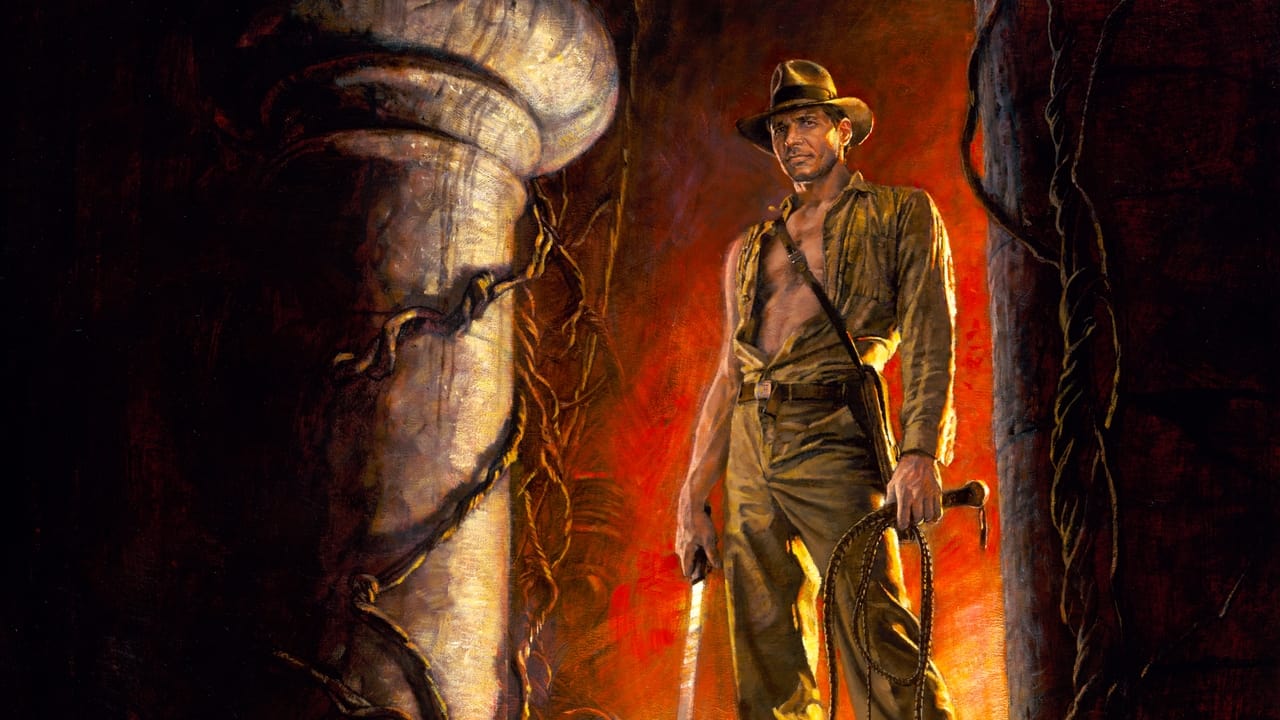
Indiana Jones and the Temple of Doom (1984)
Adventure, Action • 1h 58m
Overview
After arriving in India, Indiana Jones is asked by a desperate village to find a mystical stone. He agrees – and stumbles upon a secret cult plotting a terrible plan in the catacombs of an ancient palace.
Director: Steven Spielberg
Cast: Harrison Ford, Kate Capshaw, Ke Huy Quan, Amrish Puri, Roshan Seth, Philip Stone, Roy Chiao, David Yip, Ric Young, Chua Kah Joo, Rex Ngui, Philip Tan, Dan Aykroyd, Akio Mitamura, Michael Yama, D.R. Nanayakkara, Dharmadasa Kuruppu, Stany De Silva, Ruby de Mel, Denavaka Hamine, Iranganie Serasinghe, Dharshana Panangala, Raj Singh, Frank Olegario, Ahmed El Shenawi, Arthur F. Repola, Nizwar Karanj, Pat Roach, Moti Makan, Mellan Mitchell, Bhasker Patel, Arjun Pandher, Zia Gelani, Debbie Astell, Maureen Bacchus, Corinne Barton, Carol Beddington, Sharon Boone, Elizabeth Burville, Marisa Campbell, Christine Cartwright, Andrea Chance, Jan Colton, Louise Dalgleish, Lorraine Doyle, Vanessa Fieldwright, Brenda Glassman, Elaine Gough, Sue Hadleigh, Sarah-Jane Hassell, Samantha Hughes, Julie Kirk, Deirdre Laird, Vicki McDonald, Nina McMahon, Julia Marstand, Gaynor Martine, Lisa Mulidore, Dawn Reddall, Rebekkah Sekyi, Clare Smalley, Lee Sprintall, Jenny Turnock, Ruth Welby, Yash Agnihotri, Dickey Beer, Kenneth Coombs, Sidney Ganis, Billy Horrigan, Kathleen Kennedy, Brad Kesten, Alex Klaus, Katie Leigh, Patrick Loh, George Lucas, Tress MacNeille, Frank Marshall, Anthony Powell, Steven Spielberg, Guy Standeven





Director: James Cameron
2013 MGM Blu-ray, or 4K Blu-ray if you MUST have the mono mix, 2001 MGM DVD for a purist version with original colors and the international mono mix
2013 MGM Blu-ray for non AI transfer, 2001 MGM DVD for a purist version with original colors and the international mono mix
1991 Image Entertainment LaserDisc for the US mono mix, 2001 MGM DVD for the International mono mix
Comparison between the US and International mixes: https://vimeo.com/246332731
The 4K Blu-Ray and the 2001 MGM DVD have exclusive extras.
Director: James Cameron
2013 MGM Blu-ray, or 4K Blu-ray if you MUST have the mono mix, 2001 MGM DVD for a purist version with original colors and the international mono mix
2013 MGM Blu-ray for non AI transfer, 2001 MGM DVD for a purist version with original colors and the international mono mix
1991 Image Entertainment LaserDisc for the US mono mix, 2001 MGM DVD for the International mono mix
Comparison between the US and International mixes: https://vimeo.com/246332731
The 4K Blu-Ray and the 2001 MGM DVD have exclusive extras.

Director: Wes Craven
Theatrical: Paramount 4K Blu-ray
Uncut Director's Cut: Either the Germany Kinowelt DVD, the Japan DVD, the Scandinavian DVD, or the US LaserDisc. Fan preservation is likely better quality.
Theatrical: Paramount 4K Blu-ray
Uncut Director's Cut: Either the Germany Kinowelt DVD, the Japan DVD, the Scandinavian DVD, or the US LaserDisc. Fan preservation is likely better quality.
2011 Blu-ray/2021 4K Blu-ray
The 2011 Lionsgate Blu-ray is incredibly poor for every Original Trilogy film; older processed older DVD-era masters with heavy use of DNR, sharpening and edge enhancement with a really dull color grade. The 4K Blu-ray is miles better. The DTS-HD 5.1 across all three films appears to be the same on both the Blu-ray and 4K Blu-ray, and they appear to be the untouched theatrical 5.1 mixes.
The Uncut version has more violence: https://www.movie-censorship.com/report.php?ID=256325
Director: Wes Craven
Theatrical: Paramount 4K Blu-ray
Uncut Director's Cut: Either the Germany Kinowelt DVD, the Japan DVD, the Scandinavian DVD, or the US LaserDisc. Fan preservation is likely better quality.
Theatrical: Paramount 4K Blu-ray
Uncut Director's Cut: Either the Germany Kinowelt DVD, the Japan DVD, the Scandinavian DVD, or the US LaserDisc. Fan preservation is likely better quality.
2011 Blu-ray/2021 4K Blu-ray
The 2011 Lionsgate Blu-ray is incredibly poor for every Original Trilogy film; older processed older DVD-era masters with heavy use of DNR, sharpening and edge enhancement with a really dull color grade. The 4K Blu-ray is miles better. The DTS-HD 5.1 across all three films appears to be the same on both the Blu-ray and 4K Blu-ray, and they appear to be the untouched theatrical 5.1 mixes.
The Uncut version has more violence: https://www.movie-censorship.com/report.php?ID=256325

Director: John Lasseter
Original theatrical render: 35mm scans or 1996 Disney Deluxe Edition CAV LaserDisc boxset
Digital render: 2010 3D Blu-ray
Original theatrical render: 35mm scans or 1996 Disney Deluxe Edition CAV LaserDisc boxset
Digital render: 2010 3D Blu-ray (every version since the 2000 DVD release including the 2D 2010 Blu-ray has animation errors. The majority of those were corrected for the 3D rerelease.) The 4K Blu-ray is merely upscaled from the 2K render.
Stereo Mix: 1996 Disney Deluxe Edition CAV LaserDisc boxset
5.1 AC3 Mix: 1996 Disney Deluxe Edition CAV LaserDisc boxset
The 1997 DTS LaserDisc is a virtually untouched transfer of the theatrical 5.1 mix and should theoretically sound the best being that DTS has higher bitrates than AC3. However, the original pressing of the DTS LaserDisc has an error where the right channel is 8.5db lower than the rest. This is an easy fix in a program like Audacity, and if you can find a corrected transfer, like the ones on various fan projects online, it should be the best sounding version of the film.
The AC3 audio on Side 2 of the CLV LaserDisc has the LFE channel muted. This was left intact for the CAV release.
The 2000 and 2005 UK DVD has an error where one of the shots is brightened up way too high (when the rest of the toys hold onto Slinky as he clings onto Woody during the moving truck rescue). Plus the end credits are interlaced (the PSP UMD video is the only way to get that version of the credits without interlacing).
The 4K Blu-ray has a further remixed Atmos track.
Director: John Lasseter
Original theatrical render: 35mm scans or 1996 Disney Deluxe Edition CAV LaserDisc boxset
Digital render: 2010 3D Blu-ray
Original theatrical render: 35mm scans or 1996 Disney Deluxe Edition CAV LaserDisc boxset
Digital render: 2010 3D Blu-ray (every version since the 2000 DVD release including the 2D 2010 Blu-ray has animation errors. The majority of those were corrected for the 3D rerelease.) The 4K Blu-ray is merely upscaled from the 2K render.
Stereo Mix: 1996 Disney Deluxe Edition CAV LaserDisc boxset
5.1 AC3 Mix: 1996 Disney Deluxe Edition CAV LaserDisc boxset
The 1997 DTS LaserDisc is a virtually untouched transfer of the theatrical 5.1 mix and should theoretically sound the best being that DTS has higher bitrates than AC3. However, the original pressing of the DTS LaserDisc has an error where the right channel is 8.5db lower than the rest. This is an easy fix in a program like Audacity, and if you can find a corrected transfer, like the ones on various fan projects online, it should be the best sounding version of the film.
The AC3 audio on Side 2 of the CLV LaserDisc has the LFE channel muted. This was left intact for the CAV release.
The 2000 and 2005 UK DVD has an error where one of the shots is brightened up way too high (when the rest of the toys hold onto Slinky as he clings onto Woody during the moving truck rescue). Plus the end credits are interlaced (the PSP UMD video is the only way to get that version of the credits without interlacing).
The 4K Blu-ray has a further remixed Atmos track.

Director: Michael Bay
4K possibly teased?
Director: Michael Bay
4K possibly teased?

OG: "4K80" or "D+80" on the high seas. If not, Disney 4K Blu-ray
Special Edition: "4K97_V" or "D+97_V" on high seas.
2027 Original Trilogy restoration/50th anniversary rerelease clips leaked plus release confirmed
OG: "4K80" or "D+80" on the high seas
Special Edition: "4K97_V" or "D_97_VI" on the high seas. If not, the 4K Blu-rays are generally considered an improvement over the 2011 Blu-rays. (although both restorations are DNR'ed and have issues).
OG: LaserDisc audio is the best option for the Dolby Stereo mixes. 70mm six-track mix is included in 4K80 (taken from an actual 70mm print). There are 16mm rips of the mono mix.
Special Edition: Cinema DTS or 1997 LaserDisc for the Special Edition.
OG: "4K80" or "D+80" on the high seas. If not, Disney 4K Blu-ray
Special Edition: "4K97_V" or "D+97_V" on high seas.
2027 Original Trilogy restoration/50th anniversary rerelease clips leaked plus release confirmed
OG: "4K80" or "D+80" on the high seas
Special Edition: "4K97_V" or "D_97_VI" on the high seas. If not, the 4K Blu-rays are generally considered an improvement over the 2011 Blu-rays. (although both restorations are DNR'ed and have issues).
OG: LaserDisc audio is the best option for the Dolby Stereo mixes. 70mm six-track mix is included in 4K80 (taken from an actual 70mm print). There are 16mm rips of the mono mix.
Special Edition: Cinema DTS or 1997 LaserDisc for the Special Edition.

2017 StudioCanal 4K Blu-ray and subsequent 4K Blu-rays are notorius for being heavily denoised and smoothened. Alternatively, 35mm scans for the theatrical cut is also available.
For the Ultimate Edition with the T-1000 searching John's room and the happy future ending, the 2009 Skynet Blu-ray, which is the older pre-2017 transfer, but has DNR.
2017 StudioCanal 4K Blu-ray and subsequent 4K Blu-rays are notorius for being heavily denoised and smoothened. Alternatively, 35mm scans for the theatrical cut is also available.
For the Ultimate Edition with the T-1000 searching John's room and the happy future ending, the 2009 Skynet Blu-ray, which is the older pre-2017 transfer, but has DNR.

Directors: Tony Bancroft & Barry Cook
2020 Disney 4K Blu-ray
Digital re-render: 2020 Disney 4K Blu-ray, caveat: no Dolby Vision metadata from 4K Streaming
Original theatrical 35mm render: WOWOW HDTV broadcast
Directors: Tony Bancroft & Barry Cook
2020 Disney 4K Blu-ray
Digital re-render: 2020 Disney 4K Blu-ray, caveat: no Dolby Vision metadata from 4K Streaming
Original theatrical 35mm render: WOWOW HDTV broadcast

High seas for the recreated Theatrical Cut
High seas for the recreated Theatrical Cut, Disney 4K Blu-ray is disappointing
High seas for the recreated Theatrical Cut
High seas for the recreated Theatrical Cut, Disney 4K Blu-ray is disappointing

OG: "4K83" or "OTD83" on the high seas
Special Edition: "4K97_VI" or "D+97_VI" on the high seas
2027 Original Trilogy restoration/50th anniversary rerelease clips leaked plus release confirmed
OG: "4K83" or "OTD83" on the high seas
Special Edition: "4K97_VI" or "D+97_VI" on the high seas
OG: LaserDisc audio is the best option for the Dolby Stereo mixes (and usually included in fan restorations). There are 16mm/TV rips of the mono mixes.
Special Edition: Cinema DTS or 1997 LaserDisc for the Special Edition.
OG: "4K83" or "OTD83" on the high seas
Special Edition: "4K97_VI" or "D+97_VI" on the high seas
2027 Original Trilogy restoration/50th anniversary rerelease clips leaked plus release confirmed
OG: "4K83" or "OTD83" on the high seas
Special Edition: "4K97_VI" or "D+97_VI" on the high seas
OG: LaserDisc audio is the best option for the Dolby Stereo mixes (and usually included in fan restorations). There are 16mm/TV rips of the mono mixes.
Special Edition: Cinema DTS or 1997 LaserDisc for the Special Edition.

The new Universal 4K is AI upscaled https://slow.pics/c/5jD2BjKT and sharpened, see discussion on BR https://forum.blu-ray.com/showthread.php?t=377660&page=9
The new Universal 4K is AI upscaled https://slow.pics/c/5jD2BjKT and sharpened, see discussion on BR https://forum.blu-ray.com/showthread.php?t=377660&page=9

Director: Steven Spielberg
Director: Steven Spielberg

35mm/70mm scan, Japan WOWOW Broadcast version, letterbox LaserDisc or DVD for purist version, Paramount 4K Blu-ray heavily revisionist
35mm/70mm scan, Japan WOWOW Broadcast version, letterbox LaserDisc or DVD for purist version, Paramount 4K Blu-ray heavily revisionist
1992 LaserDisc Dolby Surround, DVD 5.1 (70mm mix), 1991 Japan LaserDisc PCM (Dolby Stereo home version)
The Paramount 4K master is HEAVILY revisionist in that all of the effects and opticals were redone and tweaked with errors and issues. There has been grain management (moments of stagnating grain and haloing) and the encoding isn't great hence the typical Paramount noise in the image. (especially skies) The HDR is a bit bright in the highlights. The color timing and Atmos remix are thankfully taming the excessively overdone terrible Blu-ray in those areas but neither is fully accurate. The Atmos remix sounds lifeless and essentially tames the crazy LFE of the Blu-ray remix that never stopped while also spreading the sound around overhead. The music is absolutely lifeless here. If it weren't for the visual changes it might be possible to regrade the picture master and just live with the encoding noise. As it is, purists will want the LaserDisc, DVD or Japan WOWOW broadcast of the Laser Pacific master which is the same master used for the awful Blu-ray just without the hideous color grading applied.
The DVD was handled by Lowry Digital and is overscrubbed like crazy plus had all sorts of DVD era edge enhancement and other issues. It instigated the digital changes of the boulder rod and snake reflection removals. The ONLY widescreen versions of the film without ANY changes are the 1992 LaserDisc and the 1999 final release VHS.
Audio wise, Raiders is EXTREMELY complex. Like the Star Wars trilogy it had three specific release mixes with variations and differences plus a fourth mix that was not used. The mono mix had unique bits and has never been officially released though you can hear bits of it on the 2003 bonus DVD and in the Raiders in Concert live symphony performances. The Dolby Stereo is roughly what was used on all pre-widescreen editions on VHS, Beta and LaserDisc in the 80's. The best iteration of that is the 1991 Japan LaserDisc reissue with PCM digital sound. This iteration is more of a home version as it doesn't really have much surround. Yet it retains dynamic range unlike the 1985 home video remix of Star Wars' Dolby Stereo track. The 70mm Dolby six track magnetic audio was supposedly used in making the excellent sounding 5.1 made for the DVD release. Before the release the film was mixed in the very short lived VistaSonic process which was Paramount backed. This was dropped very last minute as the system had tons of playback issues and the film was apparently hastily remixed in Dolby formats. When the first letterboxed transfer showed up on the 1992 Paramount LaserDisc release all of a sudden the Dolby Surround encoded matrix track it contained is without question the best sounding mix of Raiders you can find anywhere. It is more aggressive than the Dolby Stereo, more punchy than the DVD 5.1 and even contains a unique different sound effect which indicates it is clearly a different mix. It is unknown if this is the abandoned VistaSonic mix or a new quiet Dolby Surround home mix akin to the 1993 Star Wars Definitive Collection remix. To this day, the LaserDisc Dolby surround is the best sounding version of Raiders you are likely ever to hear. Even though it isn't discrete.
The Blu-ray remix though supervised by Ben Burtt went overboard on making everything aggressive and modernized. The LFE is virtually nonstop even in dialogue scenes. It is a textbook case of revisionist audio desecration. The 4K Blu-ray Atmos merely tames the LFE and reduces impact even more by moving around more elements and adding more processing. Both of these remixes are a crime.
DFIC extensive review: https://youtu.be/evsrJOTIjdA
35mm/70mm scan, Japan WOWOW Broadcast version, letterbox LaserDisc or DVD for purist version, Paramount 4K Blu-ray heavily revisionist
35mm/70mm scan, Japan WOWOW Broadcast version, letterbox LaserDisc or DVD for purist version, Paramount 4K Blu-ray heavily revisionist
1992 LaserDisc Dolby Surround, DVD 5.1 (70mm mix), 1991 Japan LaserDisc PCM (Dolby Stereo home version)
The Paramount 4K master is HEAVILY revisionist in that all of the effects and opticals were redone and tweaked with errors and issues. There has been grain management (moments of stagnating grain and haloing) and the encoding isn't great hence the typical Paramount noise in the image. (especially skies) The HDR is a bit bright in the highlights. The color timing and Atmos remix are thankfully taming the excessively overdone terrible Blu-ray in those areas but neither is fully accurate. The Atmos remix sounds lifeless and essentially tames the crazy LFE of the Blu-ray remix that never stopped while also spreading the sound around overhead. The music is absolutely lifeless here. If it weren't for the visual changes it might be possible to regrade the picture master and just live with the encoding noise. As it is, purists will want the LaserDisc, DVD or Japan WOWOW broadcast of the Laser Pacific master which is the same master used for the awful Blu-ray just without the hideous color grading applied.
The DVD was handled by Lowry Digital and is overscrubbed like crazy plus had all sorts of DVD era edge enhancement and other issues. It instigated the digital changes of the boulder rod and snake reflection removals. The ONLY widescreen versions of the film without ANY changes are the 1992 LaserDisc and the 1999 final release VHS.
Audio wise, Raiders is EXTREMELY complex. Like the Star Wars trilogy it had three specific release mixes with variations and differences plus a fourth mix that was not used. The mono mix had unique bits and has never been officially released though you can hear bits of it on the 2003 bonus DVD and in the Raiders in Concert live symphony performances. The Dolby Stereo is roughly what was used on all pre-widescreen editions on VHS, Beta and LaserDisc in the 80's. The best iteration of that is the 1991 Japan LaserDisc reissue with PCM digital sound. This iteration is more of a home version as it doesn't really have much surround. Yet it retains dynamic range unlike the 1985 home video remix of Star Wars' Dolby Stereo track. The 70mm Dolby six track magnetic audio was supposedly used in making the excellent sounding 5.1 made for the DVD release. Before the release the film was mixed in the very short lived VistaSonic process which was Paramount backed. This was dropped very last minute as the system had tons of playback issues and the film was apparently hastily remixed in Dolby formats. When the first letterboxed transfer showed up on the 1992 Paramount LaserDisc release all of a sudden the Dolby Surround encoded matrix track it contained is without question the best sounding mix of Raiders you can find anywhere. It is more aggressive than the Dolby Stereo, more punchy than the DVD 5.1 and even contains a unique different sound effect which indicates it is clearly a different mix. It is unknown if this is the abandoned VistaSonic mix or a new quiet Dolby Surround home mix akin to the 1993 Star Wars Definitive Collection remix. To this day, the LaserDisc Dolby surround is the best sounding version of Raiders you are likely ever to hear. Even though it isn't discrete.
The Blu-ray remix though supervised by Ben Burtt went overboard on making everything aggressive and modernized. The LFE is virtually nonstop even in dialogue scenes. It is a textbook case of revisionist audio desecration. The 4K Blu-ray Atmos merely tames the LFE and reduces impact even more by moving around more elements and adding more processing. Both of these remixes are a crime.
DFIC extensive review: https://youtu.be/evsrJOTIjdA

Paramount 4K Blu-ray Purist choice: Blu-ray
Paramount 4K Blu-ray new improved master with color grading and slight issues. Blu-ray is old master with original color grading
Blu-ray 5.1
The Paramount 4K Blu-ray has a much better new scan that removes the original extremely dated color grading. This is an improvement on one hand but a definite revisionist change on the other. There is the expected grain management and slight HDR issues in addition to encoding quirks from Paramount. It is a giant improvement over the original Blu-ray but the color change and other issues means that the Blu-ray is one to keep for purists to have the as-is original iteration of the film's presentation. Audio wise the film has been remixed into Atmos but it merely seems like a slightly tweaked and frankly tamed version of the original 5.1. Of the two I prefer the Blu-ray 5.1. The original Blu-ray was Dolby TrueHD and the reissue Blu-ray in the four film Blu-ray collection boxset was DTS-HDMA.
DFIC extensive review: https://youtu.be/evsrJOTIjdA?si=wtdWGxZBfhPYTIeW
Paramount 4K Blu-ray Purist choice: Blu-ray
Paramount 4K Blu-ray new improved master with color grading and slight issues. Blu-ray is old master with original color grading
Blu-ray 5.1
The Paramount 4K Blu-ray has a much better new scan that removes the original extremely dated color grading. This is an improvement on one hand but a definite revisionist change on the other. There is the expected grain management and slight HDR issues in addition to encoding quirks from Paramount. It is a giant improvement over the original Blu-ray but the color change and other issues means that the Blu-ray is one to keep for purists to have the as-is original iteration of the film's presentation. Audio wise the film has been remixed into Atmos but it merely seems like a slightly tweaked and frankly tamed version of the original 5.1. Of the two I prefer the Blu-ray 5.1. The original Blu-ray was Dolby TrueHD and the reissue Blu-ray in the four film Blu-ray collection boxset was DTS-HDMA.
DFIC extensive review: https://youtu.be/evsrJOTIjdA?si=wtdWGxZBfhPYTIeW

Paramount 4K Blu-ray heavily revisionist. Purist option: 35mm scan, Blu-ray, DVD or LaserDisc
The Paramount 4K master is HEAVILY revisionist in that all of the effects and opticals were redone and tweaked with errors and issues. There has been grain management (moments of stagnating grain and haloing) and the encoding isn't great hence the typical Paramount noise in the image. (especially skies) The HDR is a bit bright in the highlights. The Blu-ray is showing its age but does not have any of these digital alterations. It is from the scan done by Laser Pacific and is the highest quality unaltered master we have. The DVD was done by Lowry Digital and had much scrubbing and processing of grain in addition to edge enhancement. The letterbox LaserDisc was the first widescreen release and is very good for its time. There was also a rare SVHS release using the letterbox LaserDisc master.
The 4K Blu-ray audio is seemingly an Atmos remix of the 5.1 found on the Blu-ray which itself is very similar to the DVD 5.1. All are presumably based on the 70mm Dolby six track mix. The Atmos is more processed and moves the sound around more so it is inferior to the older 5.1 iterations. On release, Last Crusade had Dolby 70mm with stereo surrounds, Dolby Stereo SR for 35mm and was mixed in a THX sound theater to ensure the ultimate in technical quality in 1989. The DVD was supposedly made from the 70mm mix and the Blu-ray 5.1 seems to bring that into lossless. This is unconfirmed but each seems to be a healthy and accurate version of the original audio. However, the LaserDisc despite only having matrix PCM stereo is punchier and livelier as a listening experience. Despite not being discrete it arguably sounds better than the 5.1 versions. Some who remember seeing each of the original release versions claim to remember the 35mm Dolby DR as sounding better than the 70mm Dolby. This is a case where both sound great and it's up to fans to decide which they prefer. Both are essential for any Indy collection and the LaserDisc is very cheap. The VHS hifi seems to be the same 2.0 matrix with format differences so it can also be compared against the DVD and Blu-ray 5.1 versions.
DFIC extensive review: https://youtu.be/evsrJOTIjdA?si=wtdWGxZBfhPYTIeW
Paramount 4K Blu-ray heavily revisionist. Purist option: 35mm scan, Blu-ray, DVD or LaserDisc
The Paramount 4K master is HEAVILY revisionist in that all of the effects and opticals were redone and tweaked with errors and issues. There has been grain management (moments of stagnating grain and haloing) and the encoding isn't great hence the typical Paramount noise in the image. (especially skies) The HDR is a bit bright in the highlights. The Blu-ray is showing its age but does not have any of these digital alterations. It is from the scan done by Laser Pacific and is the highest quality unaltered master we have. The DVD was done by Lowry Digital and had much scrubbing and processing of grain in addition to edge enhancement. The letterbox LaserDisc was the first widescreen release and is very good for its time. There was also a rare SVHS release using the letterbox LaserDisc master.
The 4K Blu-ray audio is seemingly an Atmos remix of the 5.1 found on the Blu-ray which itself is very similar to the DVD 5.1. All are presumably based on the 70mm Dolby six track mix. The Atmos is more processed and moves the sound around more so it is inferior to the older 5.1 iterations. On release, Last Crusade had Dolby 70mm with stereo surrounds, Dolby Stereo SR for 35mm and was mixed in a THX sound theater to ensure the ultimate in technical quality in 1989. The DVD was supposedly made from the 70mm mix and the Blu-ray 5.1 seems to bring that into lossless. This is unconfirmed but each seems to be a healthy and accurate version of the original audio. However, the LaserDisc despite only having matrix PCM stereo is punchier and livelier as a listening experience. Despite not being discrete it arguably sounds better than the 5.1 versions. Some who remember seeing each of the original release versions claim to remember the 35mm Dolby DR as sounding better than the 70mm Dolby. This is a case where both sound great and it's up to fans to decide which they prefer. Both are essential for any Indy collection and the LaserDisc is very cheap. The VHS hifi seems to be the same 2.0 matrix with format differences so it can also be compared against the DVD and Blu-ray 5.1 versions.
DFIC extensive review: https://youtu.be/evsrJOTIjdA?si=wtdWGxZBfhPYTIeW

Universal 4K Blu-ray Trilogy Steelbook 2025, but has more DNR than old 4K
Universal 4K Blu-ray Trilogy Steelbook 2025, but has more DNR than old 4K
https://forum.blu-ray.com/showpost.php?p=23286334&postcount=7340
Universal 4K Blu-ray Trilogy Steelbook 2025, but has more DNR than old 4K
Universal 4K Blu-ray Trilogy Steelbook 2025, but has more DNR than old 4K
https://forum.blu-ray.com/showpost.php?p=23286334&postcount=7340

Director: Steven Spielberg
"Director's Cut" (Theatrical cut with minor changes): Universal 4K Blu-ray
Theatrical Cut: VHS
TV Cut: Fan restoration
"Director's Cut" (Theatrical cut with minor changes): Universal 4K Blu-ray
Theatrical Cut: VHS TV Cut: Fan restoration
1993 MCA LaserDisc (with EQ adjusted)
Director: Steven Spielberg
"Director's Cut" (Theatrical cut with minor changes): Universal 4K Blu-ray
Theatrical Cut: VHS
TV Cut: Fan restoration
"Director's Cut" (Theatrical cut with minor changes): Universal 4K Blu-ray
Theatrical Cut: VHS TV Cut: Fan restoration
1993 MCA LaserDisc (with EQ adjusted)

Director: Steven Spielberg
Director: Steven Spielberg

Director: Steven Spielberg
Director: Steven Spielberg

Director: Steven Spielberg
2D version: Warner Bros 4K Blu-ray
3D version: Warner Bros 3D Blu-ray or Apple Vision Pro
2D version: Warner Bros 4K Blu-ray
3D version: Warner Bros 3D Blu-ray or Apple Vision Pro
Director: Steven Spielberg
2D version: Warner Bros 4K Blu-ray
3D version: Warner Bros 3D Blu-ray or Apple Vision Pro
2D version: Warner Bros 4K Blu-ray
3D version: Warner Bros 3D Blu-ray or Apple Vision Pro

Director: Stanley Donen
Director: Stanley Donen


Directors: Arturo Perez Jr. & Samantha Jayne
Directors: Arturo Perez Jr. & Samantha Jayne

Director: Robert Altman
Paramount Blu-ray
Popeye was mixed for a failed Vistasonic system with 4 discrete tracks (L/C/R/S). That mix has never been released on home video in its original form.
The older 5.1 track appearing on older DVD/BD releases sounds excellent. It appears to be a slight upmix of the original mix, only splitting the surrounds and adding LFE. It sounds close to the old analog LaserDisc, which is likely the original mix in a matrixed form.
The 5.1 included on the UHD is a new remix which significantly differs from previous tracks. There are new foley effects all over the place. Music is jarringly spliced in from different sources. Unlike the old 5.1 which had clearly discrete surrounds, the channels surrounds overlap somewhat with the fronts here.
Details on the new mix from Paramount's former head of restoration: https://youtu.be/P-AmjqViJyE?t=788
The 2.0 tracks on all DVDs/BDs are just downmixes of their respective 5.1 mixes.
Samples
Director: Robert Altman
Paramount Blu-ray
Popeye was mixed for a failed Vistasonic system with 4 discrete tracks (L/C/R/S). That mix has never been released on home video in its original form.
The older 5.1 track appearing on older DVD/BD releases sounds excellent. It appears to be a slight upmix of the original mix, only splitting the surrounds and adding LFE. It sounds close to the old analog LaserDisc, which is likely the original mix in a matrixed form.
The 5.1 included on the UHD is a new remix which significantly differs from previous tracks. There are new foley effects all over the place. Music is jarringly spliced in from different sources. Unlike the old 5.1 which had clearly discrete surrounds, the channels surrounds overlap somewhat with the fronts here.
Details on the new mix from Paramount's former head of restoration: https://youtu.be/P-AmjqViJyE?t=788
The 2.0 tracks on all DVDs/BDs are just downmixes of their respective 5.1 mixes.
Samples

Director: Phillip Noyce
Director: Phillip Noyce


Director: Peter Faiman
Australia Cut: Australia Fox DVD
International Cut: Paramount Blu-ray
Encore Cut: Germany Winkler Film 4K Blu-ray
US Paramount 4K Blu-ray, unsure whether it's the International cut released by Paramount or the Encore Cut
Australia Cut: Australia Fox DVD
International Cut: Paramount Blu-ray
Encore Cut: Germany Winkler Film 4K Blu-ray
Australia Cut: Laserdisc
The film exists in three versions:
- the original Australian cut (~104 minutes at 24fps/~100 minutes at 25fps);
- the American/international version (~98 minutes at 24fps/~94 minutes at 25fps) trimming some exposition in the Outback first half of the film and some shorter extensions of a few seconds in the New York section, altering some of the dialogue – including censoring a "fuck" to "screw" – but featuring one additional dialogue extension not in the Australian version (a comparison of the two cuts can be found at Movie Censorship);
- the Australian Encore Cut (~95 minutes at 24fps/~91 minutes at 25fps) which uses the international version source so it already has those alterations but also removes approximately three minutes consisting of parts of two scenes featuring Mick grabbing the crotch of a cross-dressing prostitute and a later sequence when he does the same thing at a party to a woman with a deep voice (a comparison of the international version and the Encore Cut can be found at Movie Censorship).
Director: Peter Faiman
Australia Cut: Australia Fox DVD
International Cut: Paramount Blu-ray
Encore Cut: Germany Winkler Film 4K Blu-ray
US Paramount 4K Blu-ray, unsure whether it's the International cut released by Paramount or the Encore Cut
Australia Cut: Australia Fox DVD
International Cut: Paramount Blu-ray
Encore Cut: Germany Winkler Film 4K Blu-ray
Australia Cut: Laserdisc
The film exists in three versions:
- the original Australian cut (~104 minutes at 24fps/~100 minutes at 25fps);
- the American/international version (~98 minutes at 24fps/~94 minutes at 25fps) trimming some exposition in the Outback first half of the film and some shorter extensions of a few seconds in the New York section, altering some of the dialogue – including censoring a "fuck" to "screw" – but featuring one additional dialogue extension not in the Australian version (a comparison of the two cuts can be found at Movie Censorship);
- the Australian Encore Cut (~95 minutes at 24fps/~91 minutes at 25fps) which uses the international version source so it already has those alterations but also removes approximately three minutes consisting of parts of two scenes featuring Mick grabbing the crotch of a cross-dressing prostitute and a later sequence when he does the same thing at a party to a woman with a deep voice (a comparison of the international version and the Encore Cut can be found at Movie Censorship).

Director: Richard Linklater
Director: Richard Linklater

Japan GAGA 4K Blu-ray?
Japan GAGA 4K Blu-ray?
US Paramount has poor encoding
Japan GAGA 4K Blu-ray?
Japan GAGA 4K Blu-ray?
US Paramount has poor encoding

Director: Roman Polanski
Paramount disappointing 4K Blu-ray
Paramount disappointing 4K Blu-ray
Director: Roman Polanski
Paramount disappointing 4K Blu-ray
Paramount disappointing 4K Blu-ray
Edit History
Made with ❤️ 📀 by vanshady