


Catch Me If You Can (2002)
Drama, Crime • 2h 21m
Overview
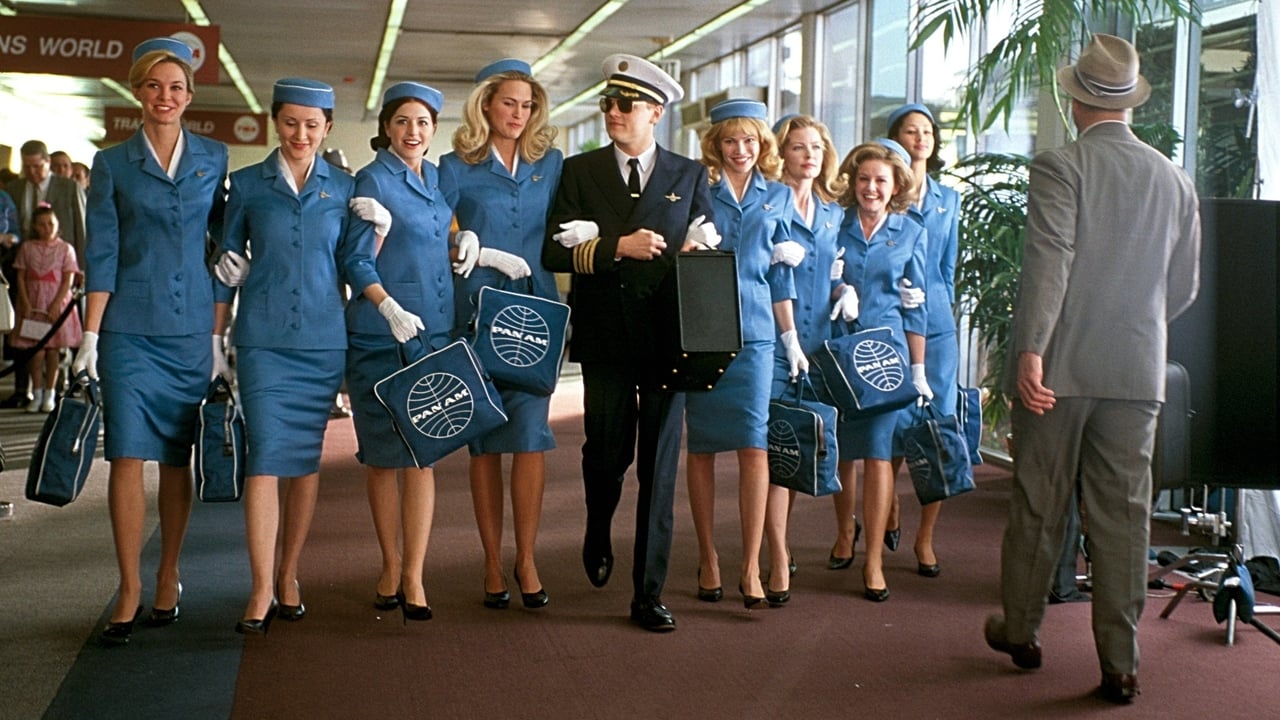
A true story about Frank Abagnale Jr. who, before his 19th birthday, successfully conned millions of dollars worth of checks as a Pan Am pilot, doctor, and legal prosecutor. An FBI agent makes it his mission to put him behind bars. But Frank not only eludes capture, he revels in the pursuit.
Director: Steven Spielberg
Cast: Leonardo DiCaprio, Tom Hanks, Christopher Walken, Martin Sheen, Nathalie Baye, Amy Adams, James Brolin, Brian Howe, Frank John Hughes, Steve Eastin, Chris Ellis, John Finn, Jennifer Garner, Nancy Lenehan, Ellen Pompeo, Elizabeth Banks, Guy Thauvette, Candice Azzara, Kitty Carlisle, Kelly McNair, Sarah Rush, Jasmine Jessica Anthony, Celine du Tertre, Kaitlin Doubleday, Matthew Kimbrough, Joshua Boyd, Jonathan Dankner, Maggie Mellin, Thomas Kopache, Margaret Travolta, Jimmie F. Skaggs, Alex Hyde-White, Lilyan Chauvin, Eugene Fleming, Robert Ruth, Jennifer Manley, James Morrison, Robert Symonds, Jennifer Kan, Robert Curtis Brown, Kelly Hutchinson, Steve Witting, Wendy Worthington, Jane Bodle, J. Patrick McCormack, Brian Goodman, Ray Proscia, Sarah Lancaster, Jill Matson, Mike Baldridge, Joel Ewing, Ritchie Montgomery, Jim Antonio, Angela Sorensen, Jonathan Brent, Benita Krista Nall, Shane Edelman, Andrew Meeks, Morgan Rusler, Jane Edith Wilson, Dave Hager, Kyle Davis, Patrick Thomas O'Brien, Jaime Ray Newman, Deborah Kellner, Mercedes Cornett, Amy Acker, Robert Peters, James DuMont, Thomas Crawford, Malachi Throne, Alfred Dennis, Max Kerstein, Donna Kimball, Jan Munroe, Stephen Dunham, Brandon Keener, Anthony Powers, Lauren Cohn, Jeremy Howard, Jack Knight, Jamie Anderson, Kam Heskin, Ana Maria Quintana, Gerald R. Molen, Stan Bly, Jamie Moss, Jessica Collins, Frank Abagnale Jr., Roger Léger, Jean-François Blanchard, Mathieu Gaudreault, Guy-Daniel Tremblay, Alex Bisping, Patrice Dussault, Paul Todd, Jake Wagner, Ashley Cohen, Kelly Cohen, Ellis Hall, Steven Meizler, Fred Datig, Joe Garagiola, Dominic Bond, Jean-François Brousseau, Francis Campeau, Raphaël Cardin, Marc-Antoine Côté, Antoine Drolet-Dumoulin, Léon Dussault-Gagné, Simon Houle-Gauthier, Vincent Généreux, Sébastien Jean, Pascal Larouche, William Lauzon, Florent Legault, Jason McNally, Julien Normandeau, David Parent-Laliberté, Alexandre Pepin, Nicolas Radeschi, Jonathan René, Samuel St-Amour, Jesse Heiman, Ryan Izay, Nick Zano, Nicole Andrews, Evis Xheneti




The new Universal 4K is AI upscaled https://slow.pics/c/5jD2BjKT and sharpened, see discussion on BR https://forum.blu-ray.com/showthread.php?t=377660&page=9
The new Universal 4K is AI upscaled https://slow.pics/c/5jD2BjKT and sharpened, see discussion on BR https://forum.blu-ray.com/showthread.php?t=377660&page=9

Director: Steven Spielberg
Director: Steven Spielberg

35mm/70mm scan, Japan WOWOW Broadcast version, letterbox LaserDisc or DVD for purist version, Paramount 4K Blu-ray heavily revisionist
35mm/70mm scan, Japan WOWOW Broadcast version, letterbox LaserDisc or DVD for purist version, Paramount 4K Blu-ray heavily revisionist
1992 LaserDisc Dolby Surround, DVD 5.1 (70mm mix), 1991 Japan LaserDisc PCM (Dolby Stereo home version)
The Paramount 4K master is HEAVILY revisionist in that all of the effects and opticals were redone and tweaked with errors and issues. There has been grain management (moments of stagnating grain and haloing) and the encoding isn't great hence the typical Paramount noise in the image. (especially skies) The HDR is a bit bright in the highlights. The color timing and Atmos remix are thankfully taming the excessively overdone terrible Blu-ray in those areas but neither is fully accurate. The Atmos remix sounds lifeless and essentially tames the crazy LFE of the Blu-ray remix that never stopped while also spreading the sound around overhead. The music is absolutely lifeless here. If it weren't for the visual changes it might be possible to regrade the picture master and just live with the encoding noise. As it is, purists will want the LaserDisc, DVD or Japan WOWOW broadcast of the Laser Pacific master which is the same master used for the awful Blu-ray just without the hideous color grading applied.
The DVD was handled by Lowry Digital and is overscrubbed like crazy plus had all sorts of DVD era edge enhancement and other issues. It instigated the digital changes of the boulder rod and snake reflection removals. The ONLY widescreen versions of the film without ANY changes are the 1992 LaserDisc and the 1999 final release VHS.
Audio wise, Raiders is EXTREMELY complex. Like the Star Wars trilogy it had three specific release mixes with variations and differences plus a fourth mix that was not used. The mono mix had unique bits and has never been officially released though you can hear bits of it on the 2003 bonus DVD and in the Raiders in Concert live symphony performances. The Dolby Stereo is roughly what was used on all pre-widescreen editions on VHS, Beta and LaserDisc in the 80's. The best iteration of that is the 1991 Japan LaserDisc reissue with PCM digital sound. This iteration is more of a home version as it doesn't really have much surround. Yet it retains dynamic range unlike the 1985 home video remix of Star Wars' Dolby Stereo track. The 70mm Dolby six track magnetic audio was supposedly used in making the excellent sounding 5.1 made for the DVD release. Before the release the film was mixed in the very short lived VistaSonic process which was Paramount backed. This was dropped very last minute as the system had tons of playback issues and the film was apparently hastily remixed in Dolby formats. When the first letterboxed transfer showed up on the 1992 Paramount LaserDisc release all of a sudden the Dolby Surround encoded matrix track it contained is without question the best sounding mix of Raiders you can find anywhere. It is more aggressive than the Dolby Stereo, more punchy than the DVD 5.1 and even contains a unique different sound effect which indicates it is clearly a different mix. It is unknown if this is the abandoned VistaSonic mix or a new quiet Dolby Surround home mix akin to the 1993 Star Wars Definitive Collection remix. To this day, the LaserDisc Dolby surround is the best sounding version of Raiders you are likely ever to hear. Even though it isn't discrete.
The Blu-ray remix though supervised by Ben Burtt went overboard on making everything aggressive and modernized. The LFE is virtually nonstop even in dialogue scenes. It is a textbook case of revisionist audio desecration. The 4K Blu-ray Atmos merely tames the LFE and reduces impact even more by moving around more elements and adding more processing. Both of these remixes are a crime.
DFIC extensive review: https://youtu.be/evsrJOTIjdA
35mm/70mm scan, Japan WOWOW Broadcast version, letterbox LaserDisc or DVD for purist version, Paramount 4K Blu-ray heavily revisionist
35mm/70mm scan, Japan WOWOW Broadcast version, letterbox LaserDisc or DVD for purist version, Paramount 4K Blu-ray heavily revisionist
1992 LaserDisc Dolby Surround, DVD 5.1 (70mm mix), 1991 Japan LaserDisc PCM (Dolby Stereo home version)
The Paramount 4K master is HEAVILY revisionist in that all of the effects and opticals were redone and tweaked with errors and issues. There has been grain management (moments of stagnating grain and haloing) and the encoding isn't great hence the typical Paramount noise in the image. (especially skies) The HDR is a bit bright in the highlights. The color timing and Atmos remix are thankfully taming the excessively overdone terrible Blu-ray in those areas but neither is fully accurate. The Atmos remix sounds lifeless and essentially tames the crazy LFE of the Blu-ray remix that never stopped while also spreading the sound around overhead. The music is absolutely lifeless here. If it weren't for the visual changes it might be possible to regrade the picture master and just live with the encoding noise. As it is, purists will want the LaserDisc, DVD or Japan WOWOW broadcast of the Laser Pacific master which is the same master used for the awful Blu-ray just without the hideous color grading applied.
The DVD was handled by Lowry Digital and is overscrubbed like crazy plus had all sorts of DVD era edge enhancement and other issues. It instigated the digital changes of the boulder rod and snake reflection removals. The ONLY widescreen versions of the film without ANY changes are the 1992 LaserDisc and the 1999 final release VHS.
Audio wise, Raiders is EXTREMELY complex. Like the Star Wars trilogy it had three specific release mixes with variations and differences plus a fourth mix that was not used. The mono mix had unique bits and has never been officially released though you can hear bits of it on the 2003 bonus DVD and in the Raiders in Concert live symphony performances. The Dolby Stereo is roughly what was used on all pre-widescreen editions on VHS, Beta and LaserDisc in the 80's. The best iteration of that is the 1991 Japan LaserDisc reissue with PCM digital sound. This iteration is more of a home version as it doesn't really have much surround. Yet it retains dynamic range unlike the 1985 home video remix of Star Wars' Dolby Stereo track. The 70mm Dolby six track magnetic audio was supposedly used in making the excellent sounding 5.1 made for the DVD release. Before the release the film was mixed in the very short lived VistaSonic process which was Paramount backed. This was dropped very last minute as the system had tons of playback issues and the film was apparently hastily remixed in Dolby formats. When the first letterboxed transfer showed up on the 1992 Paramount LaserDisc release all of a sudden the Dolby Surround encoded matrix track it contained is without question the best sounding mix of Raiders you can find anywhere. It is more aggressive than the Dolby Stereo, more punchy than the DVD 5.1 and even contains a unique different sound effect which indicates it is clearly a different mix. It is unknown if this is the abandoned VistaSonic mix or a new quiet Dolby Surround home mix akin to the 1993 Star Wars Definitive Collection remix. To this day, the LaserDisc Dolby surround is the best sounding version of Raiders you are likely ever to hear. Even though it isn't discrete.
The Blu-ray remix though supervised by Ben Burtt went overboard on making everything aggressive and modernized. The LFE is virtually nonstop even in dialogue scenes. It is a textbook case of revisionist audio desecration. The 4K Blu-ray Atmos merely tames the LFE and reduces impact even more by moving around more elements and adding more processing. Both of these remixes are a crime.
DFIC extensive review: https://youtu.be/evsrJOTIjdA

Paramount 4K Blu-ray Purist choice: Blu-ray
Paramount 4K Blu-ray new improved master with color grading and slight issues. Blu-ray is old master with original color grading
Blu-ray 5.1
The Paramount 4K Blu-ray has a much better new scan that removes the original extremely dated color grading. This is an improvement on one hand but a definite revisionist change on the other. There is the expected grain management and slight HDR issues in addition to encoding quirks from Paramount. It is a giant improvement over the original Blu-ray but the color change and other issues means that the Blu-ray is one to keep for purists to have the as-is original iteration of the film's presentation. Audio wise the film has been remixed into Atmos but it merely seems like a slightly tweaked and frankly tamed version of the original 5.1. Of the two I prefer the Blu-ray 5.1. The original Blu-ray was Dolby TrueHD and the reissue Blu-ray in the four film Blu-ray collection boxset was DTS-HDMA.
DFIC extensive review: https://youtu.be/evsrJOTIjdA?si=wtdWGxZBfhPYTIeW
Paramount 4K Blu-ray Purist choice: Blu-ray
Paramount 4K Blu-ray new improved master with color grading and slight issues. Blu-ray is old master with original color grading
Blu-ray 5.1
The Paramount 4K Blu-ray has a much better new scan that removes the original extremely dated color grading. This is an improvement on one hand but a definite revisionist change on the other. There is the expected grain management and slight HDR issues in addition to encoding quirks from Paramount. It is a giant improvement over the original Blu-ray but the color change and other issues means that the Blu-ray is one to keep for purists to have the as-is original iteration of the film's presentation. Audio wise the film has been remixed into Atmos but it merely seems like a slightly tweaked and frankly tamed version of the original 5.1. Of the two I prefer the Blu-ray 5.1. The original Blu-ray was Dolby TrueHD and the reissue Blu-ray in the four film Blu-ray collection boxset was DTS-HDMA.
DFIC extensive review: https://youtu.be/evsrJOTIjdA?si=wtdWGxZBfhPYTIeW

Paramount 4K Blu-ray heavily revisionist. Purist option: 35mm scan, Blu-ray, DVD or LaserDisc
The Paramount 4K master is HEAVILY revisionist in that all of the effects and opticals were redone and tweaked with errors and issues. There has been grain management (moments of stagnating grain and haloing) and the encoding isn't great hence the typical Paramount noise in the image. (especially skies) The HDR is a bit bright in the highlights. The Blu-ray is showing its age but does not have any of these digital alterations. It is from the scan done by Laser Pacific and is the highest quality unaltered master we have. The DVD was done by Lowry Digital and had much scrubbing and processing of grain in addition to edge enhancement. The letterbox LaserDisc was the first widescreen release and is very good for its time. There was also a rare SVHS release using the letterbox LaserDisc master.
The 4K Blu-ray audio is seemingly an Atmos remix of the 5.1 found on the Blu-ray which itself is very similar to the DVD 5.1. All are presumably based on the 70mm Dolby six track mix. The Atmos is more processed and moves the sound around more so it is inferior to the older 5.1 iterations. On release, Last Crusade had Dolby 70mm with stereo surrounds, Dolby Stereo SR for 35mm and was mixed in a THX sound theater to ensure the ultimate in technical quality in 1989. The DVD was supposedly made from the 70mm mix and the Blu-ray 5.1 seems to bring that into lossless. This is unconfirmed but each seems to be a healthy and accurate version of the original audio. However, the LaserDisc despite only having matrix PCM stereo is punchier and livelier as a listening experience. Despite not being discrete it arguably sounds better than the 5.1 versions. Some who remember seeing each of the original release versions claim to remember the 35mm Dolby DR as sounding better than the 70mm Dolby. This is a case where both sound great and it's up to fans to decide which they prefer. Both are essential for any Indy collection and the LaserDisc is very cheap. The VHS hifi seems to be the same 2.0 matrix with format differences so it can also be compared against the DVD and Blu-ray 5.1 versions.
DFIC extensive review: https://youtu.be/evsrJOTIjdA?si=wtdWGxZBfhPYTIeW
Paramount 4K Blu-ray heavily revisionist. Purist option: 35mm scan, Blu-ray, DVD or LaserDisc
The Paramount 4K master is HEAVILY revisionist in that all of the effects and opticals were redone and tweaked with errors and issues. There has been grain management (moments of stagnating grain and haloing) and the encoding isn't great hence the typical Paramount noise in the image. (especially skies) The HDR is a bit bright in the highlights. The Blu-ray is showing its age but does not have any of these digital alterations. It is from the scan done by Laser Pacific and is the highest quality unaltered master we have. The DVD was done by Lowry Digital and had much scrubbing and processing of grain in addition to edge enhancement. The letterbox LaserDisc was the first widescreen release and is very good for its time. There was also a rare SVHS release using the letterbox LaserDisc master.
The 4K Blu-ray audio is seemingly an Atmos remix of the 5.1 found on the Blu-ray which itself is very similar to the DVD 5.1. All are presumably based on the 70mm Dolby six track mix. The Atmos is more processed and moves the sound around more so it is inferior to the older 5.1 iterations. On release, Last Crusade had Dolby 70mm with stereo surrounds, Dolby Stereo SR for 35mm and was mixed in a THX sound theater to ensure the ultimate in technical quality in 1989. The DVD was supposedly made from the 70mm mix and the Blu-ray 5.1 seems to bring that into lossless. This is unconfirmed but each seems to be a healthy and accurate version of the original audio. However, the LaserDisc despite only having matrix PCM stereo is punchier and livelier as a listening experience. Despite not being discrete it arguably sounds better than the 5.1 versions. Some who remember seeing each of the original release versions claim to remember the 35mm Dolby DR as sounding better than the 70mm Dolby. This is a case where both sound great and it's up to fans to decide which they prefer. Both are essential for any Indy collection and the LaserDisc is very cheap. The VHS hifi seems to be the same 2.0 matrix with format differences so it can also be compared against the DVD and Blu-ray 5.1 versions.
DFIC extensive review: https://youtu.be/evsrJOTIjdA?si=wtdWGxZBfhPYTIeW

Paramount 4K Blu-ray heavily revisionist. Purist option: 35mm scan, Blu-ray, DVD or LaserDisc.
The Paramount 4K master is HEAVILY revisionist in that all of the effects and opticals were redone and tweaked with errors and issues. There has been grain management (moments of stagnating grain and haloing) and the encoding isn't great hence the typical Paramount noise in the image. (especially skies) The HDR is a bit bright in the highlights. The Blu-ray is showing its age but does not have any of these digital alterations. It is from the scan done by Laser Pacific and is the highest quality unaltered master we have. The DVD was done by Lowry Digital and had much scrubbing and processing of grain in addition to edge enhancement. The letterbox LaserDisc was the first widescreen release and is very good for its time.
The 4K Blu-ray audio is seemingly an Atmos remix of the 5.1 found on the Blu-ray which itself is very similar to the DVD 5.1. All are presumably based on the 70mm Dolby six track mix. The Atmos is more processed and moves the sound around more so it is inferior to the older 5.1 iterations. On release Temple of Doom had 70mm, 35mm Dolby Stereo and mono mixes. The mono was for 16mm and other outlets and is presumably close to if not a mixdown of the stereo. It is seemingly the last Lucasfilm title that had a mono mix made. The Dolby Stereo is one of the most aggressive matrix mixes ever made and is still a blast to this day on the letterbox LaserDisc release. It is more aggressive than any of the 5.1 discrete versions which is either due to studios taming the audio later or the 35mm mix being handled a bit differently to the 70mm mix. In terms of releases today, the LaserDisc still sounds better than DVD, Blu-ray or 4K Blu-ray because of this factor.
DFIC extensive review: https://youtu.be/evsrJOTIjdA?si=wtdWGxZBfhPYTIeW
Paramount 4K Blu-ray heavily revisionist. Purist option: 35mm scan, Blu-ray, DVD or LaserDisc.
The Paramount 4K master is HEAVILY revisionist in that all of the effects and opticals were redone and tweaked with errors and issues. There has been grain management (moments of stagnating grain and haloing) and the encoding isn't great hence the typical Paramount noise in the image. (especially skies) The HDR is a bit bright in the highlights. The Blu-ray is showing its age but does not have any of these digital alterations. It is from the scan done by Laser Pacific and is the highest quality unaltered master we have. The DVD was done by Lowry Digital and had much scrubbing and processing of grain in addition to edge enhancement. The letterbox LaserDisc was the first widescreen release and is very good for its time.
The 4K Blu-ray audio is seemingly an Atmos remix of the 5.1 found on the Blu-ray which itself is very similar to the DVD 5.1. All are presumably based on the 70mm Dolby six track mix. The Atmos is more processed and moves the sound around more so it is inferior to the older 5.1 iterations. On release Temple of Doom had 70mm, 35mm Dolby Stereo and mono mixes. The mono was for 16mm and other outlets and is presumably close to if not a mixdown of the stereo. It is seemingly the last Lucasfilm title that had a mono mix made. The Dolby Stereo is one of the most aggressive matrix mixes ever made and is still a blast to this day on the letterbox LaserDisc release. It is more aggressive than any of the 5.1 discrete versions which is either due to studios taming the audio later or the 35mm mix being handled a bit differently to the 70mm mix. In terms of releases today, the LaserDisc still sounds better than DVD, Blu-ray or 4K Blu-ray because of this factor.
DFIC extensive review: https://youtu.be/evsrJOTIjdA?si=wtdWGxZBfhPYTIeW

Universal 4K Blu-ray Trilogy Steelbook 2025, but has more DNR than old 4K
Universal 4K Blu-ray Trilogy Steelbook 2025, but has more DNR than old 4K
https://forum.blu-ray.com/showpost.php?p=23286334&postcount=7340
Universal 4K Blu-ray Trilogy Steelbook 2025, but has more DNR than old 4K
Universal 4K Blu-ray Trilogy Steelbook 2025, but has more DNR than old 4K
https://forum.blu-ray.com/showpost.php?p=23286334&postcount=7340

Director: Steven Spielberg
"Director's Cut" (Theatrical cut with minor changes): Universal 4K Blu-ray
Theatrical Cut: VHS
TV Cut: Fan restoration
"Director's Cut" (Theatrical cut with minor changes): Universal 4K Blu-ray
Theatrical Cut: VHS TV Cut: Fan restoration
1993 MCA LaserDisc (with EQ adjusted)
Director: Steven Spielberg
"Director's Cut" (Theatrical cut with minor changes): Universal 4K Blu-ray
Theatrical Cut: VHS
TV Cut: Fan restoration
"Director's Cut" (Theatrical cut with minor changes): Universal 4K Blu-ray
Theatrical Cut: VHS TV Cut: Fan restoration
1993 MCA LaserDisc (with EQ adjusted)

Director: Steven Spielberg
Director: Steven Spielberg

Director: Steven Spielberg
Director: Steven Spielberg
More Drama on Blu-ray


Director: George Roy Hill
Director: George Roy Hill

Director: Robert Wise
Disney 4K Blu-ray, see caps https://slow.pics/c/hE3HUCdj
Disney 4K Atmos is great, a reference quality track. It's a very slight remix (music seems to be from a better source), but it's completely seamless and faithful to the original, better fidelity than anything since the 1994 30th Anniversary Edition LaserDisc.
All DVDs (and 2010 Blu-ray) sound far worse than the 4K Blu-ray/LaserDisc and have various missing sound cues.
Director: Robert Wise
Disney 4K Blu-ray, see caps https://slow.pics/c/hE3HUCdj
Disney 4K Atmos is great, a reference quality track. It's a very slight remix (music seems to be from a better source), but it's completely seamless and faithful to the original, better fidelity than anything since the 1994 30th Anniversary Edition LaserDisc.
All DVDs (and 2010 Blu-ray) sound far worse than the 4K Blu-ray/LaserDisc and have various missing sound cues.

Director: S. S. Rajamouli
Zee5 Streaming has the original Telugu audio and English subtitles (albeit with English portions also overdubbed in Telugu)
Netflix Streaming only has the Hindi dub but better video quality
France Carlotta 4K Blu-ray coming in December
Japan Twin Co. 4K Blu-ray
Japan Twin Co. 4K Blu-ray has original Telugu Atmos audio
Director: S. S. Rajamouli
Zee5 Streaming has the original Telugu audio and English subtitles (albeit with English portions also overdubbed in Telugu)
Netflix Streaming only has the Hindi dub but better video quality
France Carlotta 4K Blu-ray coming in December
Japan Twin Co. 4K Blu-ray
Japan Twin Co. 4K Blu-ray has original Telugu Atmos audio

Director: Ivan Passer
Radiance 4K Blu-ray, though note its different color grading from the IP-sourced but poorly compressed Fun City Editions US Blu-ray (caps)
Judging from spectrograms at https://forum.blu-ray.com/showpost.php?p=23933756&postcount=57, Fun City Editions US Blu-ray appears to have marginally less filtering than Radiance 4K Blu-ray (whose padded 16-bit depth is a non-issue). There are also loudness differences, though it's unclear whether dynamic range also differs. Caveat: need to A/B both tracks to confirm, but no one has posted actual A/B impressions.
Director: Ivan Passer
Radiance 4K Blu-ray, though note its different color grading from the IP-sourced but poorly compressed Fun City Editions US Blu-ray (caps)
Judging from spectrograms at https://forum.blu-ray.com/showpost.php?p=23933756&postcount=57, Fun City Editions US Blu-ray appears to have marginally less filtering than Radiance 4K Blu-ray (whose padded 16-bit depth is a non-issue). There are also loudness differences, though it's unclear whether dynamic range also differs. Caveat: need to A/B both tracks to confirm, but no one has posted actual A/B impressions.


Director: Rob Reiner
UK Arrow 4K Blu-ray release date September 21 2026
Kino Lorber 4K Blu-ray or Germany Capelight 4K Blu-ray no comparison available
Shout! Factory Blu-ray has exclusive extras the Kino Lorber/ Capelight release doesn't
The initial release of the Capelight 4K mediabook had some playback issues with Dolby Vision on Panasonic devices due to an encoding error, the HDR10 apparently works fine, see Capelight’s official response here.
Director: Rob Reiner
UK Arrow 4K Blu-ray release date September 21 2026
Kino Lorber 4K Blu-ray or Germany Capelight 4K Blu-ray no comparison available
Shout! Factory Blu-ray has exclusive extras the Kino Lorber/ Capelight release doesn't
The initial release of the Capelight 4K mediabook had some playback issues with Dolby Vision on Panasonic devices due to an encoding error, the HDR10 apparently works fine, see Capelight’s official response here.

Director: Joe Wright
Director: Joe Wright


Director: Rob Reiner
Director: Rob Reiner
Edit History
Made with ❤️ 📀 by vanshady